Articles
On getting things done
Why work gets put off and what helps, for people and for small crews. The research is named, and so is what it does not show.
-
 Shift work
Photo proof on tasks: when a picture saves an argument on a job site
"That crack was there before you started." "No it wasn't." A photo from day one ends that conversation; a camera roll of 4,000 unlabelled pictures doesn't. What to photograph on a job (before, hidden work, deliveries, done), how…
-
 Shift work
Construction punch lists: closing out a job without the last 5% dragging on
The job is 95% done and the last 5% takes a month: a missing outlet cover, a scuffed door, a drain that runs slow, and a client who won't release the final payment until they are fixed. What goes on a punch list, why every line…
-
 Shift work
Time clock rounding: how the 7-minute rule works, and when it shortchanges a crew
US federal rules let an employer round clock punches to the nearest 5, 6 or 15 minutes, as long as it evens out over time. The 7-minute rule is the quarter-hour version. How the rounding works, a worked example of a policy that…
-
 Brain and work
How long does it take to build a habit? The 66-day study, read properly
"It takes 66 days to form a habit" comes from one 2010 study of 96 volunteers, and the number is a median from fewer than half of them. The same study found a range of 18 to 254 days, and that missing a day did not undo the work…
-
 Shift work
Restaurant opening and closing checklists that actually get done
Most restaurants have an opening and a closing checklist. In most of them it is a laminated sheet that gets ticked from memory at the end of the shift. What makes a checklist get done for real: one owner per station, a number or…
-
 Procrastination
Deadlines you set yourself: the famous experiment was retracted. What the evidence says now
For twenty years, one 2002 experiment was the proof that spaced deadlines beat one big deadline and that the dates you set yourself half work. In September 2026 the journal retracted it after a failed replication and signs that…
-
 Brain and work
Does the Pomodoro technique work? What studies of timed breaks found
Twenty-five minutes of work, five of rest, repeat: millions of people use it and almost nobody tested it until 2023. One study found timed breaks left students less tired and just as productive in less time. A second, with the…
-
 Getting things done
The planning fallacy: why every task takes longer than you think, and how to estimate better
Students who guessed 34 days for a thesis took 55, and their worst-case guess was still too short. The planning fallacy is one of the steadiest findings in the psychology of work: we plan from the steps we can picture and ignore…
-
 Small teams
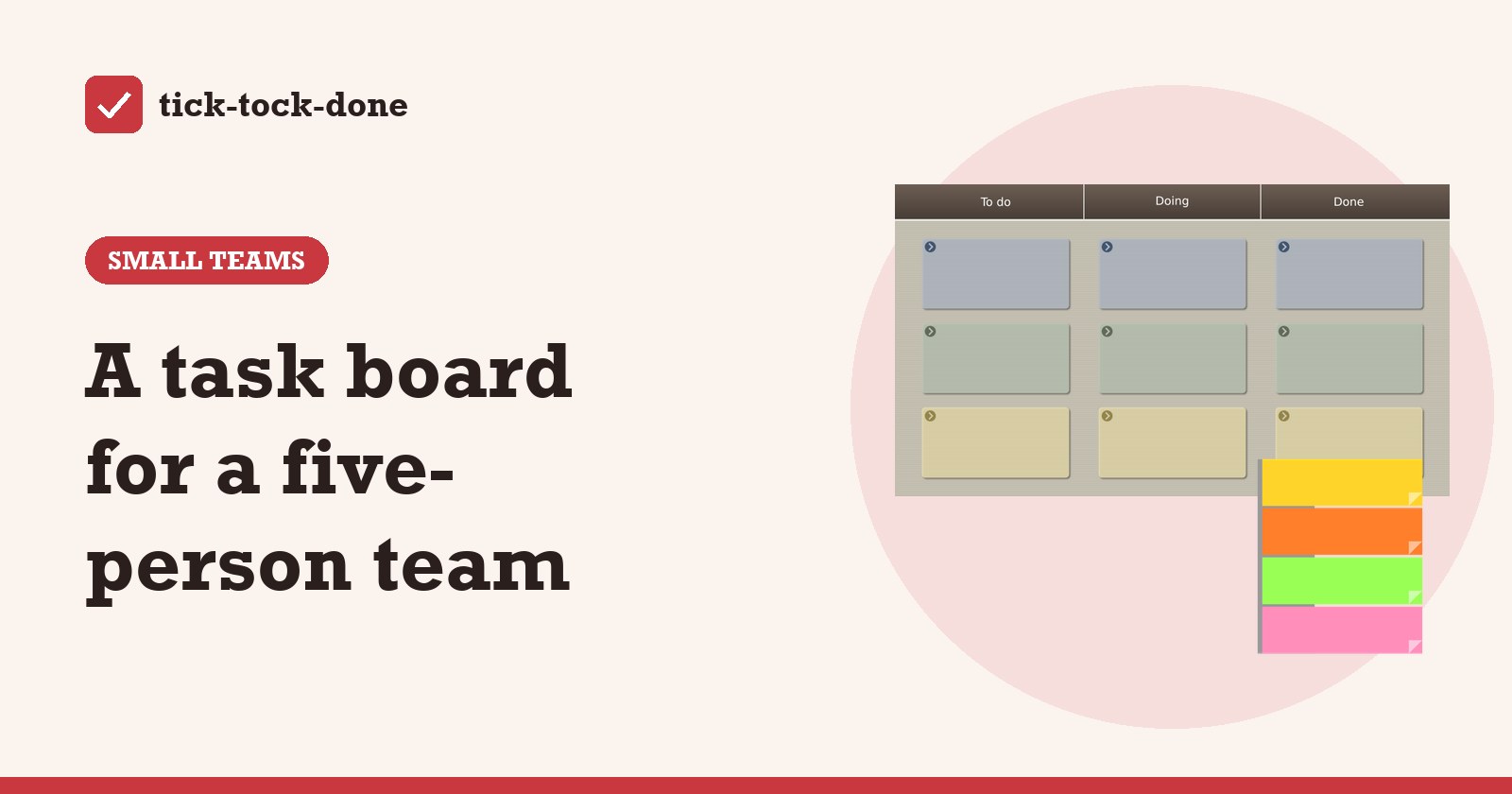
A task board for a five-person team: set up statuses, owners and due dates in one afternoon
A crew of five doesn't need a project management course. It needs one board everyone can see, four columns, one name on every job and a date on the jobs that have one. A step-by-step setup in tick-tock-done with real screens, the…
-
 Brain and work
Why finished work feels lighter: unfinished tasks, the Zeigarnik effect and your working memory
The famous claim is that the mind remembers unfinished tasks better than finished ones. A 2025 meta-analysis found that part doesn't hold up. What does hold up is more useful: open tasks pull you back, leak into the next job and…
-
 Procrastination
Why you put things off, and the two-minute start that gets you moving
Procrastination is rarely about laziness or bad time management. Research reads it as mood repair: you dodge the bad feeling a task gives you now and hand the cost to your future self. What the studies show, what they don't, and…
-
 Brain and work
Dopamine and the tick: what crossing off a task does in your brain, and what it doesn't
"Ticking a box gives you a hit of dopamine" is half right. Dopamine neurons respond most to rewards that are better than expected, and they learn to fire at the signs of progress, not just at the finish. What that means for to-do…
-
 Getting things done
One list and a weekly review: the two Getting Things Done habits worth keeping
Getting Things Done has a lot of parts, and most people drop the system within weeks. Two habits carry most of the value: get every open loop out of your head into one trusted list, and look at that list properly once a week. Why…
-
 Shift work
Shift handovers that don't drop tasks: a checklist for kitchens and building sites
Most dropped tasks aren't forgotten by the person who started them; they fall into the gap between one shift and the next. Hospitals cut harmful errors by 30% with a structured handover called I-PASS. What it teaches, adapted for…